What the Agafay Actually Is
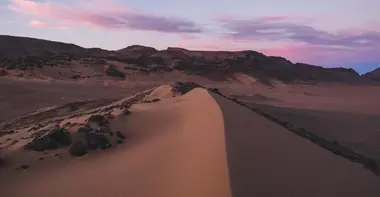
The Agafay is a rocky desert plateau that sits at around 700 metres altitude, 25 to 40 kilometres south of Marrakech. Geologically it is a limestone hammada — the same type of flat, rocky desert found across North Africa. There are no sand dunes. The surface is pale grey and beige rock, scattered scrub, the occasional argan tree and very little else.
The landscape is striking in a specific way: completely bare, completely flat, with the jagged peaks of the High Atlas rising abruptly at its southern edge. Jebel Toubkal — the highest peak in North Africa — is visible on clear days. The contrast between the barren plateau in the foreground and the snow-capped mountains behind it is the defining visual of the place.
Lalla Takerkoust reservoir lies at the western edge of the Agafay — a large artificial lake that reflects the Atlas and adds a further incongruity to the landscape. Flamingos and migratory birds appear around the edges in season.
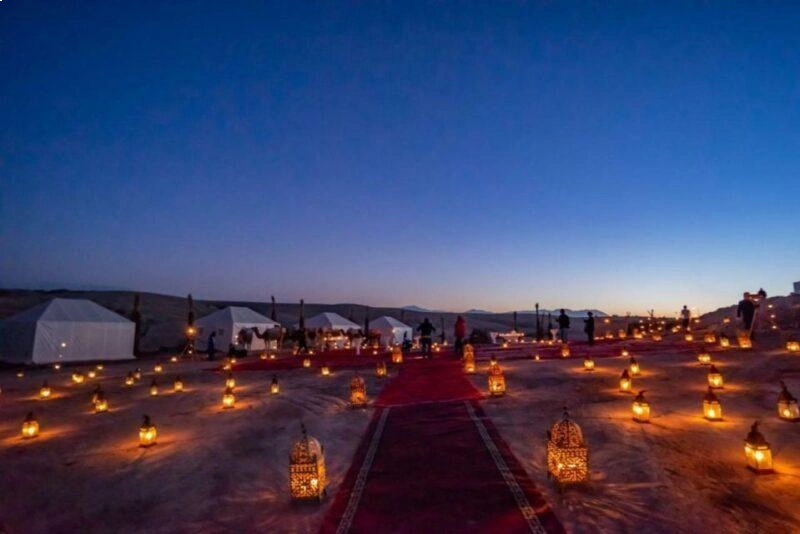
The Agafay has been developed for tourism over the past decade, with a cluster of luxury camps, riads and glamping sites concentrated in the area around the Kik plateau. The camps are a significant part of what draws visitors — they are well-designed, often photogenic, and provide a structured way to experience the landscape.
Agafay vs the Sahara — Honest Comparison
This is the most common question and deserves a direct answer.
The Agafay is not a substitute for the Sahara. Erg Chebbi near Merzouga — 150-metre orange sand dunes stretching to the horizon, camel trek at sunset, Berber camp under stars — is a qualitatively different experience. If you have three or four days and the Sahara is on your list, do not replace it with Agafay.
The Agafay is its own thing, worth doing on its own terms. The silence and bareness are genuine. The proximity to Marrakech means you can do it as an afternoon and evening without rearranging your itinerary. The sunset over the Atlas from the plateau is exceptional. The camps are more comfortable and accessible than desert camps at Merzouga.
Who the Agafay works best for: travelers with limited time who want a contrast to Marrakech without a multi-day commitment; families with young children for whom a camel ride and sunset in a calm setting is the right level; anyone who has already done the Sahara and wants a different desert experience closer to the city.
Comparing desert options near Marrakech? Our guide covers the full picture — Agafay, Zagora and Merzouga honestly compared.
Merzouga vs Zagora — full comparison →Activities
Camel rides are available at all the major camps — short circuits of 20 to 45 minutes across the plateau at sunset. The camels here are working animals accustomed to this route and the experience is calm rather than dramatic. The light on the Atlas behind you during the ride is the main event.
Quad bikes and dune buggies are offered by several operators in the Agafay — sessions of 1 to 2 hours on the plateau and the surrounding piste tracks. Better suited to the rocky terrain here than to sand. Book in advance; availability varies by season.
Horse riding at a slower pace across the plateau is available from two or three operators near Lalla Takerkoust. Better suited to riders with some experience than complete beginners.
Swimming at Lalla Takerkoust — the reservoir has beach areas on its northern shore that are popular with Marrakchi families in summer. Jet skis and pedal boats are available for rent. A different kind of afternoon from the camp experience.
Sunset and dinner at a camp is the activity most visitors come for. The camps organize the experience around arrival at 5pm, camel ride at 5:30, dinner around a fire as the Atlas turns pink, return to Marrakech by 10pm. A self-contained evening that requires nothing else.
The Camps — Day Trip vs Dinner vs Overnight
The Agafay camp market has grown significantly in the past five years. There are now dozens of options ranging from basic Bedouin tents to high-design glamping with private pools. Three formats exist:
Day trip (half-day, typically morning): arrival at the camp, quad biking or camel ride, lunch, return to Marrakech by early afternoon. Best for families or anyone who wants the landscape without the evening program. Cost: 300 to 600 MAD per person depending on activities included.
Sunset dinner: the most popular format. Arrive late afternoon, camel ride at sunset, dinner around a fire with Gnawa music, return to Marrakech. No overnight required. This is what our Agafay sunset dinner covers. Cost: 400 to 800 MAD per person including dinner.
Overnight: same as the dinner format plus sleeping in a tent or cabin at the camp. Worthwhile if you want to see the stars — the Agafay has very little light pollution at night — and wake up to the Atlas at dawn. Not necessary for most visitors on a short Marrakech trip.
On choosing a camp: the range in quality is wide. The most-photographed camps (abundant on Instagram) are not always the best in practice. Prioritize camps that include transport from Marrakech, have clear pricing, and offer a fixed program rather than a la carte upselling. Ask specifically what the dinner is — some camps serve a full Moroccan spread; others offer a limited menu at additional cost.
Best Time to Visit
October to April is the best window for the Agafay. Temperatures on the plateau are comfortable (15 to 25°C), the Atlas snow cover makes the backdrop dramatic, and the sunset colors are at their most saturated.
Summer (June to August) is the hardest season. The plateau sits in full sun with no shade and temperatures reach 38 to 42°C by midday. The sunset dinner format works in summer — you arrive at 5pm when the worst heat has passed — but morning day trips are uncomfortable. The camps have pools for a reason.
Spring (March to May) adds a brief window of green to the plateau edges and brings wildflowers to the Atlas foothills — the Agafay at its most photogenic. Book in advance; this is peak demand.
Getting There from Marrakech
The Agafay is 25 to 40 kilometres south of Marrakech — 40 minutes by road. Most visitors go as part of an organized tour or camp transfer, which is the practical approach — the camps are spread across a large area and finding a specific camp without local knowledge involves navigating dirt tracks.
Our Agafay desert day trip and sunset dinner both include hotel pickup and drop-off in Marrakech. No driving, no navigation, no parking.
Driving yourself: take the P2017 south towards Ourika then turn west at Ait Aadel towards Lalla Takerkoust. A standard car handles the main roads. The final approach to some camps involves unsealed tracks — check with your specific camp before deciding.
Practical Information
What to bring: Sunscreen and a hat for morning visits. A light layer for evening — temperatures drop quickly after sunset on the plateau. Closed shoes are better than sandals for quad biking. Cash for any extras not included in the package.
Photography: The best light on the Atlas is 30 minutes before sunset — the peaks turn orange and pink as the plateau goes blue-grey. The same light makes for the best camel ride photographs. Arrive at least 30 minutes before sunset to be in position.
Children: The Agafay is well-suited to families. The camel rides are calm, the terrain is flat and open, and the camp format is structured enough that children have a clear program. Most camps accommodate young children without issue.
Booking: The sunset dinner format books out on weekends in high season. For Friday and Saturday visits in March, April, October and November, book at least a week in advance.