The Contrast — From Marrakech to the Sahara
Marrakech is noise, colour and density. The souks of the medina are a sensory overload — spice stalls, leather tanneries, the call to prayer echoing off walls that have not changed in eight centuries. Jemaa el-Fna at night smells of grilled meat and orange blossom water. Guéliz has coffee shops and boutiques that could be in Paris or London. The city is alive in every direction at once.
A desert tour from Marrakech is one of the most complete reversals of environment that travel offers. You leave a city of a million people and arrive, a day later, in a place where the loudest sound is wind moving sand. No claxons. No crowds. No WiFi signal. The air changes texture before you see the dunes — drier, cleaner, slightly sharp on the skin. When you step out of the vehicle at the edge of the Sahara, something adjusts inside you before you have time to think about it.
The Journey South
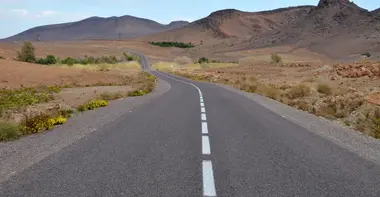
The drive from Marrakech is not dead time. It is the transition, and it is part of the experience. The road climbs immediately into the High Atlas — switchbacks up the face of the mountain, the city shrinking behind you, the air cooling as you gain altitude. The Tizi n'Tichka pass sits at 2,260 metres. In winter it is sometimes covered in snow. In spring the slopes are green and smell of wild thyme. At the top, you cross into a different Morocco.
The descent opens onto the southern plateau — warmer, ochre-coloured, the vegetation sparse. Ait Benhaddou appears on its hill, the most photographed kasbah in Morocco, built from the same earth that surrounds it. Ouarzazate follows — lunch, a stretch, the last real city before the desert. Then the road continues east through the Dadès Valley, past ancient fortified villages half-dissolved into the landscape, towards Tinghir and the Todra Gorge, where the walls rise 300 metres on both sides of the path.
The final approach to Merzouga is unmistakable. The terrain flattens, the palms thin out, and on the horizon something that looks like a low orange cloud refuses to move. That is Erg Chebbi.
The Dunes — What You Actually Experience
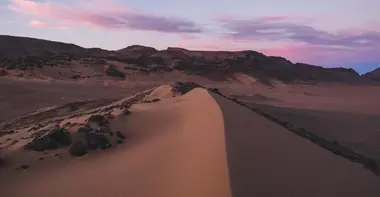
Nothing in photographs prepares you for the scale. The dunes at Erg Chebbi reach 150 metres and extend for kilometres in every direction. Standing at the base and looking toward the horizon, you cannot find a reference point to anchor your sense of distance. The colour shifts continuously — gold in the afternoon, deep orange at sunset, violet- grey in the hour before dawn.
Walking in the sand is harder than it looks. Each step sinks slightly and the surface gives way. Climbing without shoes burns the feet — the sand retains heat through the afternoon. With shoes it is slower but more controlled. The wind carries fine grains against your face, into your eyes, into the corners of your mouth. You understand immediately, viscerally, why Berber people wrap their heads in a chech before going anywhere near the open desert.
At the top of the highest dune the view is a panoramic sweep of orange that extends further than makes sense. The effort of the climb disappears. Most people sit there for longer than they planned to. When the sunset begins, something happens to time. It slows down. The mind clears. The body, still faintly burning from the climb, is almost absent. Travelers with a tendency toward overthinking consistently report this as one of the few moments they were genuinely present — nowhere else to be, nothing else to think about, just the light changing over 150 metres of sand.
The Camp — Food, Fire and Berber Music
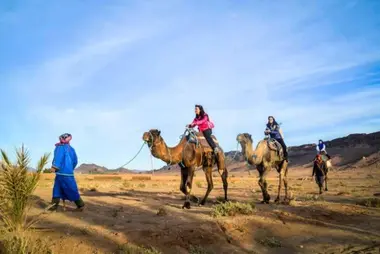
The camel ride from the village to the camp takes 45 minutes to an hour. The camels move at a pace that matches the landscape — slow, slightly swaying, unhurried. You arrive at camp as the light disappears and the temperature begins its rapid drop.
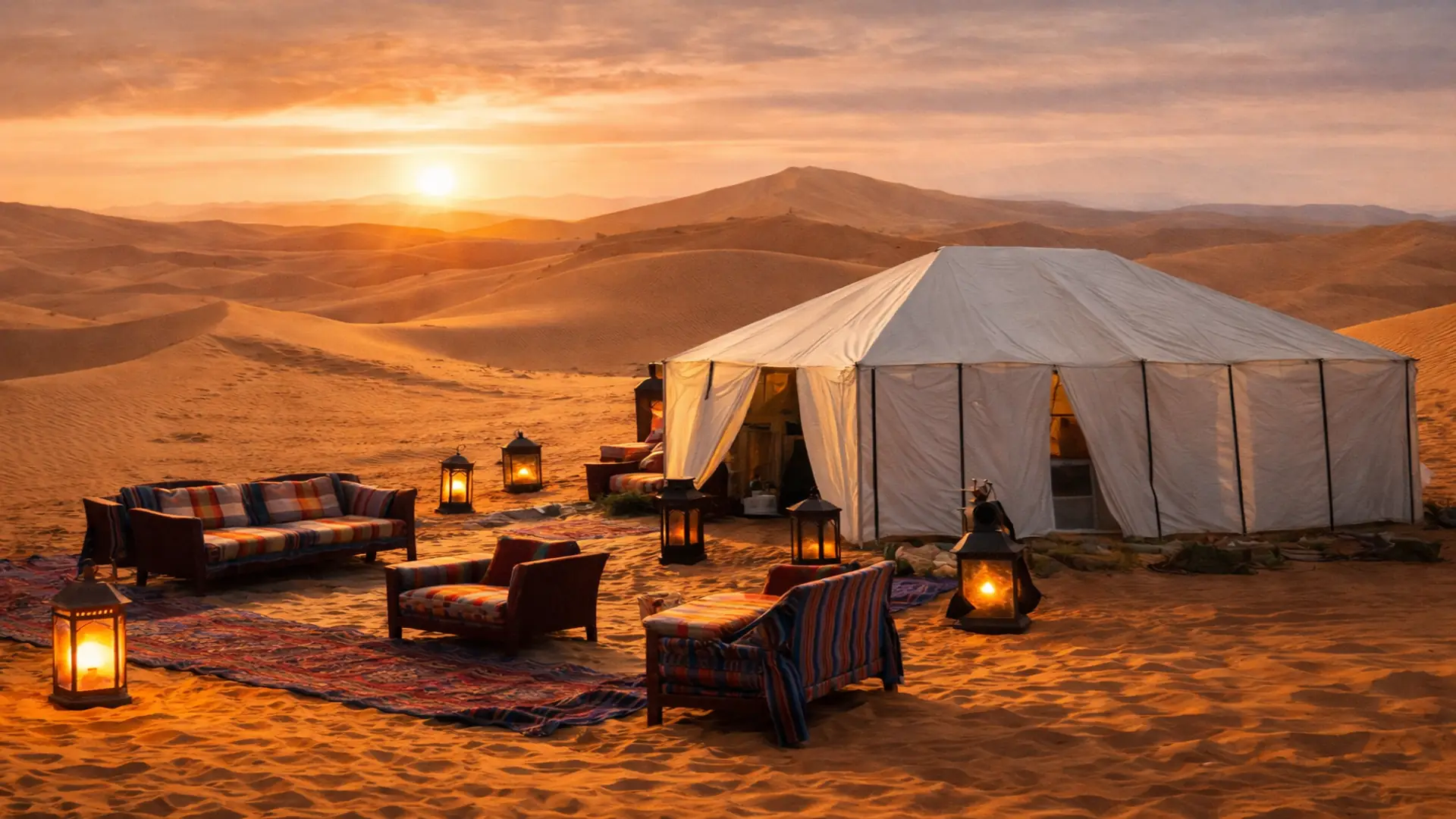
The tents are traditional Berber style — low, fabric, rugs on the floor, basic bedding. The camps provide blankets. In winter, proper ones — dense camel wool, the kind that does not feel like hotel bedding. In spring and autumn you will want one from midnight onward. The cold surprises almost everyone.
Dinner is cooked on site. Tagine or couscous, Moroccan salads, khobz bread, dates, mint tea poured from height into small glasses. After dinner someone produces a drum and a guembri — the traditional three-stringed lute — and the evening becomes its own thing. Gnaoua music around a fire in the Sahara, with the Milky Way visible overhead and nothing else for 100 kilometres in any direction, is the kind of experience you find yourself describing to people for years afterward. We have written a full account of what a night in the Sahara looks like — from the camel ride to the 5am sunrise.
The 5am alarm for sunrise is the most reliably good decision of the trip. The light in the first 20 minutes after the sun appears over the dune crest is something a phone camera cannot reproduce accurately. Worth every cold minute.
What to Do in the Desert
Beyond the camel ride and the camp, the Merzouga area offers more than most people expect. Quad biking on the dunes is available directly from the village — 30 minutes to an hour, depending on how much of the dune field you want to cover. 4x4 excursions go further, toward the Algerian border and the black volcanic rock formations of the Hamada.
The Khamlia village, 10 kilometres from Merzouga, is home to a community descended from West African slaves brought across the Sahara centuries ago. Their Gnaoua music is different from what you hear at the camp — older, more ritualistic, performed in a small room where the sound has nowhere to go. Worth the detour.
Rissani, 22 kilometres west, has a market that has been running since the 13th century. Dates in more varieties than you knew existed, local fabrics, desert herbs, fossils from the trilobite-rich rock of the Tafilalet plains. Medfouna — a stuffed flatbread called the Berber pizza — is the thing to eat for lunch.
What Travelers Say
The recurring description is not what you would expect from a travel review. People do not usually write about the logistics or the camel ride time. They write about feeling small in a way that was not frightening. About silence so complete it had texture. About arriving back in Marrakech and finding the city loud in a way that felt, briefly, wrong.
One traveler who made the trip four times described the moment of stepping off the vehicle at Merzouga: the dry air immediately on the face, lips tightening slightly, the sun present but different from city sun — as if filtered through something. The body, she said, knew before the mind did that it was somewhere else entirely.
The sand on the face during the dune climb. The weight of the camel wool blanket at 3am. The specific orange of the dunes at the exact moment before the sun clears the horizon. These are the details that come back.
The Sahara is not a comfortable experience. It is hot or cold depending on the hour, physically demanding if you choose to climb, logistically removed from everything familiar. It is also, consistently, the thing travelers say they would do again without hesitation. Some kind of recalibration happens in the desert that city travel does not produce. Whether that is the silence, the scale, or simply the complete absence of the usual noise — it works.
Plan Your Desert Tour
The main decisions before booking are destination, duration and format — whether to do a 2-day Zagora tour, a 3-day Merzouga tour, or push further with a 5-day Chegaga expedition or the 6-day Grand Sud circuit covering all three desert regions. We have written detailed guides for each:
- Merzouga or Zagora? — The two deserts compared by distance, dunes and who each suits. Or our 4-day tour covering both.
- 2, 3 or 4 days? — What you actually gain with each extra day.
- Private or shared group? — Cost, flexibility and experience compared.
If you already know what you want, our tours run daily from Marrakech. Message us on WhatsApp and we will confirm availability and answer any questions directly.