The Valley — What It Actually Is
The Ourika Valley follows the Oued Ourika river south from the Marrakech plain into the High Atlas. The road climbs steadily from 460 metres at Marrakech to 1,800 metres at Setti Fatma, the village at the end of the tarmac road. That altitude gain — over 60 kilometres — is enough to change the landscape completely.
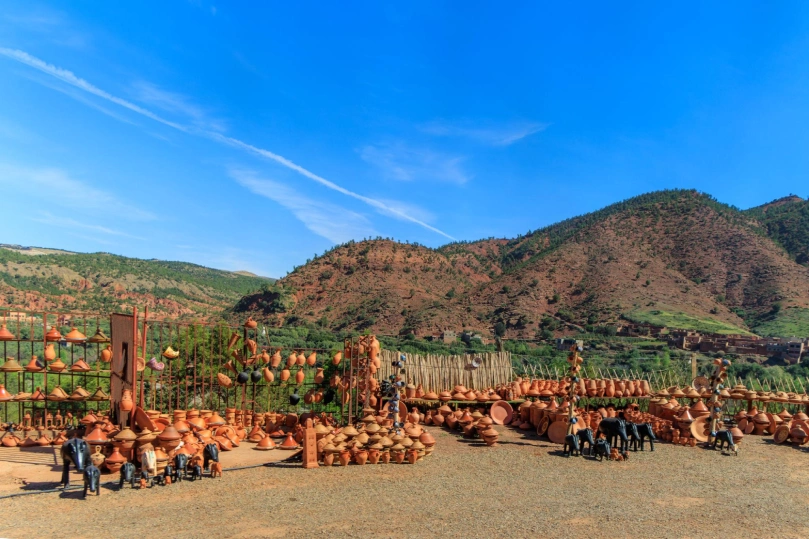
The lower valley (the first 30 kilometres) is agricultural. Berber villages cling to the hillsides above terraced fields of wheat, onions and medicinal herbs. The river runs fast and clear alongside the road. Roadside stalls sell argan oil, cactus honey and dried herbs. The atmosphere is rural Morocco, not tourist Morocco.
The upper valley tightens as the mountains close in. The rock faces rise steeply on both sides, the vegetation changes from farmland to scrub and cedar, and the river becomes noisier. By the time you reach Setti Fatma, the valley is narrow enough that the sun drops behind the peaks by early afternoon.
Most visitors come for the waterfall hike at the end. The valley itself — the drive, the villages, the river — is what makes the day genuinely good. The waterfall is the destination but the road is the experience.
Setti Fatma and the Waterfalls
Setti Fatma is the last village accessible by car and the starting point for the waterfall hike. It sits at the confluence of two rivers and has a small cluster of restaurants, guesthouses and craft stalls. It is not a scenic village in itself — the appeal is what lies above it.
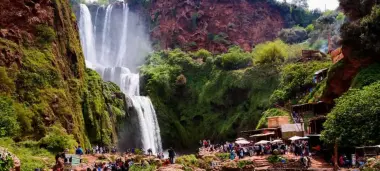
The Setti Fatma waterfalls are a series of seven cascades that climb into the mountains above the village. The first waterfall is 45 minutes from the village on a well-marked stone path that follows the river. The path involves some scrambling over rocks and one section where you cross the river on stepping stones — wear shoes with grip.
The first waterfall is the most impressive and the most visited. A pool at its base, shaded by the cliff walls, stays cool even in summer heat. Local guides at the village entrance offer to show you the way — they know the path well but it is not necessary unless you want company. The path is clear.
The second, third and fourth waterfalls require another hour of increasingly steep hiking. Each is less visited than the one before. By the fourth cascade you are unlikely to encounter other tourists. The views back down the valley from the upper section are worth the effort even if you turn back before the top. Allow 4 to 5 hours for the full circuit to waterfall four and back.
One practical note: the local guides who meet you at the village entrance are not employed by any official body. They are local men who know the path and work for tips. If you want a guide, agree a price before setting off (100 to 150 MAD for a return trip to waterfall one is fair). If you prefer to go alone, say so clearly at the start.
The Ourika Valley is the Day 2 we recommend to most clients staying in Marrakech. Our guided day trip covers the valley drive, Setti Fatma and lunch at the river.
See the Ourika Valley day trip →The Monday Market at Tnine Ourika
Tnine Ourika is a village about 25 kilometres south of Marrakech on the valley road. Every Monday it hosts a souk that has been running for generations — a genuine local market where Berber farmers from the surrounding hillside villages come to sell produce, livestock and household goods.
It is nothing like the tourist souks of Marrakech medina. The stalls sell chickens, donkeys, second-hand tools, vegetables, mint, live rabbits and cheap plastic goods. The clientele is almost entirely Moroccan. You can walk through it without being approached, which is itself unusual for a Morocco market experience.
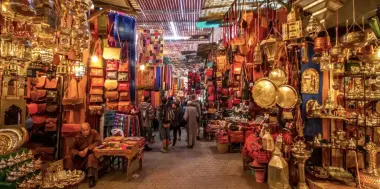
The contrast between the Tnine souk and Djemaa el-Fna is so complete that seeing both in the same day — the Monday market on the way out, the medina on the way back — gives you a more accurate picture of Morocco than spending a week in Marrakech alone.
If your visit falls on a Monday, the market runs from around 8am to 1pm. It is 10 minutes off the main route with no detour required. Do not miss it.
Best Time to Visit
March to May is the best window by some distance. The river is running fast and clear from snowmelt, the terraced fields above the villages are vivid green, wildflowers appear on the upper slopes and the temperature in the valley is comfortable — 18 to 22°C even when Marrakech is at 28°C. Spring weekdays are quiet enough that you can have stretches of the path to Setti Fatma entirely to yourself.
October and November bring good conditions with thinner crowds. The vegetation is drying out by this point but the light in autumn is warm and the mountains are clear before winter cloud settles in.
Summer is the most popular time among Moroccan families — the valley stays 8 to 10°C cooler than Marrakech, which makes it a weekend escape from July heat. This means the road and village are genuinely crowded on Friday and Saturday afternoons. Come early and plan to leave by 2pm. The river walk and pool at the first waterfall are the draw in summer heat.
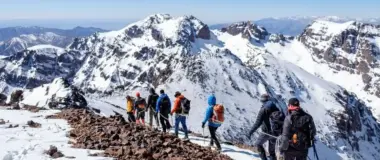
Winter is the least visited season and has genuine appeal. Snow appears on the upper peaks from December, the valley turns brown and quiet, and the drive is the most dramatic of any season. The path to the waterfall can be muddy after rain. Bring layers — at 1,800 metres in January it is cold by Moroccan standards, even at midday.
Getting There from Marrakech
The Ourika Valley is 30 kilometres south of Marrakech — about 45 minutes to an hour by road depending on traffic leaving the city. The route takes the P2017 south from the city, clearly signposted from the southern edge of Marrakech. The road is paved throughout and straightforward to drive.
A guided day trip from Marrakech is the most practical option for most visitors — it includes transport, a stop at the Monday market if the timing aligns, and drops you at Setti Fatma with time to hike before lunch.
Public transport: shared taxis (grands taxis) leave from Bab Rob in Marrakech to Setti Fatma. The journey takes around 1.5 hours in a shared vehicle, costs around 25 to 35 MAD per person, and requires waiting for the taxi to fill. Return taxis can be scarce late in the afternoon — leave Setti Fatma by 4pm to avoid waiting.
Where to Eat
The terrace restaurants at Setti Fatma are built directly over the river — wooden platforms extending over the fast-moving water, shaded by overhanging rock and willow trees. The setting is better than the food, which is honest Moroccan — tagine, grilled brochettes, Berber omelette, mint tea. Expect 60 to 100 MAD for a full meal.
The restaurants between the car park and the waterfall path are interchangeable in terms of menu and quality. The ones furthest from the car park and closest to the river tend to have better settings. Arrive for lunch between 12:30 and 1pm for the best terrace spots before afternoon crowds arrive.
One specifically worth noting: the herb and spice gardens in the lower valley at Jardin Bio Berbère (around kilometre 20 on the valley road) offer a brief guided walk through medicinal plants used in Berber medicine. Small entrance fee, accompanied by a mint tea. A good stop on the way back.
Practical Information
Entrance: No entrance fee for the valley or the waterfall path. The local guides at Setti Fatma work for tips — 100 to 150 MAD for a return trip to waterfall one if you want company.
Footwear: The path to the first waterfall involves river crossings on stepping stones and rocky sections. Closed shoes with grip are better than sandals. Trainers are fine; sandals are manageable but uncomfortable on the scrambling sections.
Swimming: The pools below the waterfalls are popular swimming spots in summer. The water is cold year-round — glacier-fed from the upper snowfields. Perfectly clean. Bring a towel.
Cash: No ATMs in the valley. Bring dirhams from Marrakech for restaurants, guides and market purchases. Restaurants accept cash only.
Altitude: Setti Fatma sits at 1,800 metres. If you are arriving from sea level, this is unlikely to cause issues for a day visit. For the upper waterfall hike (2,200 metres and above), take it slowly if you feel short of breath on ascent.