What Is a Riad — and What It Is Not
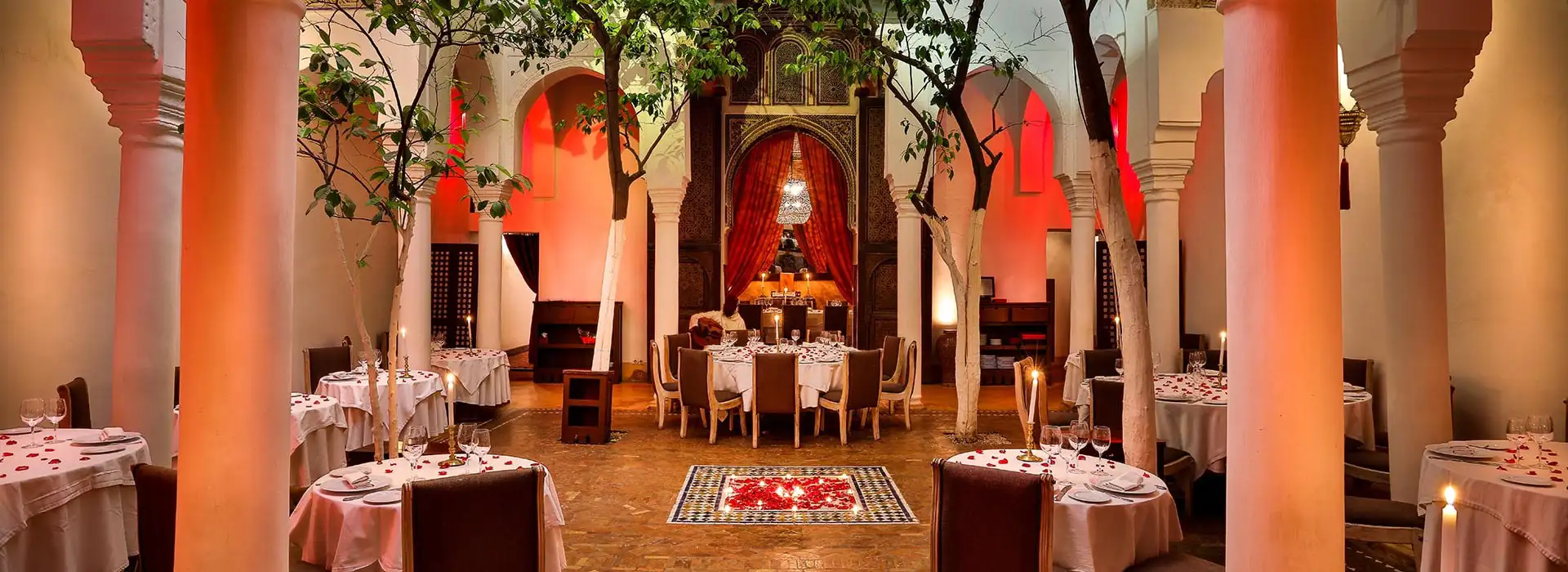
The word riad (from the Arabic ryad, meaning garden) refers to a traditional Moroccan house built around an interior courtyard garden. The defining feature is the inward orientation — all rooms face the courtyard rather than the street. From outside, a riad is a blank wall with a door. Inside, it can be anything.
The term has been stretched significantly by the tourism industry. Hotels in Guéliz that have a vaguely Moroccan interior sometimes call themselves riads. True riads are in the medina, built in the traditional style, with a central patio — often with a fountain and orange or lemon trees — and rooms on two or three floors around it. A rooftop terrace is standard. A plunge pool in the courtyard is common in the better properties.
There are approximately 1,300 declared guesthouses in Marrakech and the surrounding area. Undeclared ones add to that number. The range in quality is enormous — from genuinely beautiful restored historic houses run by attentive owners to cramped, poorly maintained rooms dressed up with some zellige tiles and sold as "authentic." Knowing what to look for matters.
Medina vs Guéliz — Which Location
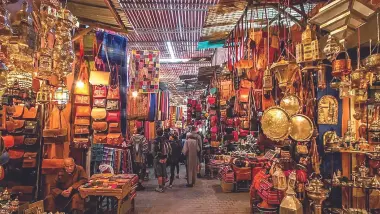
The medina is where traditional riads are. It is also where the souks, Djemaa el-Fna, the historic monuments and most of the character of Marrakech is. Staying in the medina means waking up inside the experience rather than commuting to it. The trade-off is the navigation — medina addresses are genuinely difficult to find, the streets are too narrow for taxis to enter, and the 10-minute walk from the nearest taxi drop-off point can feel longer at midnight with luggage.
Most medina riads arrange a meet at a landmark on arrival and send someone to carry your bags. It becomes normal quickly. For a first visit, staying in the medina is the right choice.
Guéliz, the new city west of the medina, has a different character — wide boulevards, restaurants, cafés, the Majorelle Garden nearby. Accommodation here tends to be hotels rather than traditional riads. If you are visiting primarily for the food scene or prefer a quieter, more navigable base, Guéliz is worth considering.
Budget Riads — Under €80 per Night
Marrakech has a large supply of decent budget accommodation in the medina — small guesthouses of 4 to 8 rooms, family-run, in authentic buildings, with breakfast included. The rooms are typically smaller than at mid-range properties and the courtyard may be compact, but the essential riad experience — the patio, the tile work, the rooftop terrace — is present.
What to check at this price point: read recent reviews specifically for noise (thin walls, street noise, construction nearby), hot water reliability, and whether the owner or manager is on site. Budget riads with an absent owner and untrained staff provide a very different experience from those where the family lives on site.
The Bab Doukkala and Mouassine neighborhoods in the medina have a particularly good concentration of well-priced small riads within walking distance of the souks.
Mid-Range Riads — €80 to €200 per Night
This is the strongest category in Marrakech. A budget of €100 to €150 per night gets you a genuinely well-restored riad with a proper courtyard pool, tastefully decorated rooms, reliable service and a good breakfast. The properties at this price point represent some of the best accommodation value in Morocco.
Many of the most acclaimed riads in Marrakech sit in this range — owned by European expats who bought crumbling historic properties in the 1990s and 2000s, restored them with care, and now run them personally. This personal ownership model consistently produces better results than hotel-managed properties at the same price.
Luxury Riads — Above €200 per Night
Above €200 per night, the Marrakech riad offer becomes genuinely exceptional. Private pools, butler service, in-room hammams, personalised itineraries, chefs cooking dinner in the courtyard. Several properties in this category are among the best hotels in Africa by any measure.
At the very top sits the Royal Mansour — a palace commissioned by King Mohammed VI and built by the best Moroccan craftsmen over several years. The Royal Mansour is not a hotel with riad-style rooms: it is a private medina of 53 individual riads, each with its own entrance, courtyard, rooftop pool and butler. The construction quality — carved cedarwood ceilings, hand-laid zellige floors, silk fabrics — is the finest expression of Moroccan decorative arts in a hospitality context. Starting from €800 per night.
Best Riads for Families
Families need riads with specific features that not every property offers: interconnecting rooms or suites that sleep four, a pool or plunge pool suitable for children, a courtyard large enough for children to move around, and staff who are genuinely comfortable with younger guests.
The Royal Mansour Privilege collection (two-bedroom riads, 430 sqm, private pool) was specifically designed for families and is one of the best family luxury accommodation options in Morocco. At a more accessible price, several mid-range riads in the Mouassine quarter have family-sized suites and enclosed courtyards.
Best Riads for Couples
For couples, the priority is atmosphere rather than space — a beautiful room, a private or semi-private rooftop terrace, good breakfast, and a location that allows evening walks in the medina. The smaller the riad (4 to 6 rooms), the more intimate the experience.
Look for riads where breakfast is served on the rooftop or in the courtyard rather than in a communal dining room, where you can request dinner in the patio, and where the property is genuinely quiet (avoid those directly on a busy medina thoroughfare).
Three Riads We Recommend to Our Clients
These are properties our clients have used and returned satisfied. We recommend them based on consistent feedback, not commercial arrangements.
Riad Itrane — Heart of the Medina, 2 Minutes from Djemaa el-Fna
Riad Itrane ("stars" in Berber) sits at Derb Jamaâ, 2 minutes on foot from Djemaa el-Fna — one of the closest quality riads to the main square. The property has 12 rooms named after stars and constellations, four courtyards, two fountains and a counter-current pool heated in winter. The rooftop terrace has a panoramic view of the medina, the Koutoubia minaret and the Atlas Mountains.
Chef Touria runs the kitchen — breakfast changes daily and is consistently praised in reviews (fresh crêpes, eggs, fruits, local pastries). Dinner on request in the patio or on the roof. Staff are multilingual and arrange day trips and transfers on request. TripAdvisor rank: #64 of 1,293 guesthouses in Marrakech. Starting from approximately €100 per night.
Riad Ajmal — Bab Doukkala, Quiet Quarter, Good Value
Riad Ajmal is in the Bab Doukkala quarter — a pleasant, less touristy part of the medina close to the Dar El Bacha palace and the rue des antiquaires. Seven suites, plunge pool, rooftop terrace with Atlas and Koutoubia views, hammam and spa services on site. A 10-minute walk to Djemaa el-Fna.
The property is fully renovated and managed by an attentive team. Multilingual staff (English, French, Arabic). Two on-site restaurants. TripAdvisor rank: #123 of 1,419 guesthouses in Marrakech with a 5/5 rating. Starting from approximately €55 per night.
Royal Mansour — The Benchmark for Moroccan Luxury
The Royal Mansour is in a category of its own. Commissioned by King Mohammed VI and built by master craftsmen (maâlems) over several years, the property consists of 53 individual three-floor riads spread across a private medina. Each riad has its own entrance, courtyard, rooftop pool and a dedicated butler who moves through underground passages to serve without intruding.
The construction quality — hand-carved plaster, hand-laid zellige, bespoke silk fabrics — is the finest in Morocco. Four restaurants including La Grande Table Marocaine, ranked among the best in Africa. Spa over 2,500 sqm on three floors. For honeymooners, milestone anniversaries or anyone for whom the best matters more than the price: there is nowhere better in Marrakech. Starting from €800 per night.
What to Check Before Booking
Official classification: Check that the property is officially registered. The classification document should be visible at reception. Unregistered riads have no external oversight.
Recent reviews: Look at reviews from the last 3 months specifically. Management changes, renovation works and service quality fluctuate. A riad with excellent reviews from 2021 and poor reviews from last month is a different property.
Room location: In a traditional riad, ground floor rooms around the courtyard are cooler and darker. Upper floor rooms are brighter and warmer. Rooftop rooms (where they exist) have the most light and the best views but can be hot in summer.
Noise: Ask specifically about street noise and neighbouring construction. Some medina riads sit on heavily trafficked passages. A quiet derb (dead-end alley) is significantly more peaceful.
Arrival logistics: Confirm the meet-and-greet procedure before arrival. Medina riads are impossible to find without local guidance, especially at night. A good riad sends someone to meet you at a named landmark.