Currency & Payments
The Moroccan dirham (MAD) is a closed currency — you cannot buy it before you arrive. Get cash at the airport ATM on arrival. The rate is fair and you will avoid the poor exchange rates at currency booths. ATMs are available throughout Marrakech but become scarce south of Ouarzazate — withdraw enough cash before heading into the desert.
Card payments work in larger restaurants, riads and supermarkets in the new city. The medina is almost entirely cash. The souks are entirely cash. Markets, street food, taxis, tips — all cash. Budget for more cash than you think you need.
Rough price guide: coffee 15–25 MAD, lunch at a local restaurant 40–70 MAD, taxi across Marrakech 20–40 MAD, entry to Bahia Palace 70 MAD. The dirham trades at roughly 10.5 to the euro and 13 to the pound.
Tipping — Who, How Much, When
Tipping is expected in Morocco and forms a meaningful part of income for many people in the service industry. The amounts are small by European standards but significant locally.
Restaurants: 10% if service was good. Rounding up the bill is also fine for smaller meals.
Taxi drivers: Not obligatory but rounding up is appreciated.
Hotel staff: 10–20 MAD for bags carried, 20–30 MAD per night for housekeeping if staying multiple nights.
Desert tour guides: 50–100 MAD per person per day is standard. Camp staff who cook and serve dinner — 50 MAD total per group is appropriate. Camel handlers — 20–30 MAD per person.
Museum and site guides: 50–100 MAD for a good guided visit. If you did not ask for a guide and someone attached themselves to you anyway, you are not obligated to tip. A polite decline at the start saves this situation.
Dress Code — The Real Rules
Morocco is a Muslim country and modest dress is respectful and practically useful — it reduces unwanted attention, particularly for women. The rules are less strict than many travelers expect and more nuanced than most guides suggest.
In Marrakech: shoulders and knees covered is the baseline. This applies in the medina, souks, mosques (non-Muslims cannot enter most mosques but can visit the exterior), and in local restaurants. In the new city (Gueliz) and hotel pool areas, normal European clothing is fine.
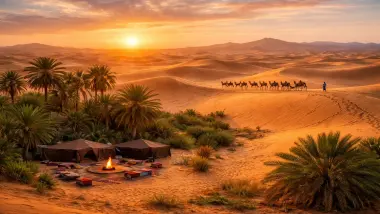
In the desert: dress practically. Long, loose clothing is better than shorts and a t-shirt in the sun regardless of cultural considerations — it protects against sunburn and is cooler in the desert heat than exposed skin. A headscarf is useful against sand on the camel ride.
The honest truth: tourists in shorts and sleeveless tops walk through the Marrakech medina every day and nothing happens to them. Modest dress is about respect and practicality, not a legal requirement. The difference it makes to your experience — less hassle, more warmth from locals — is real.
Bargaining in the Souks
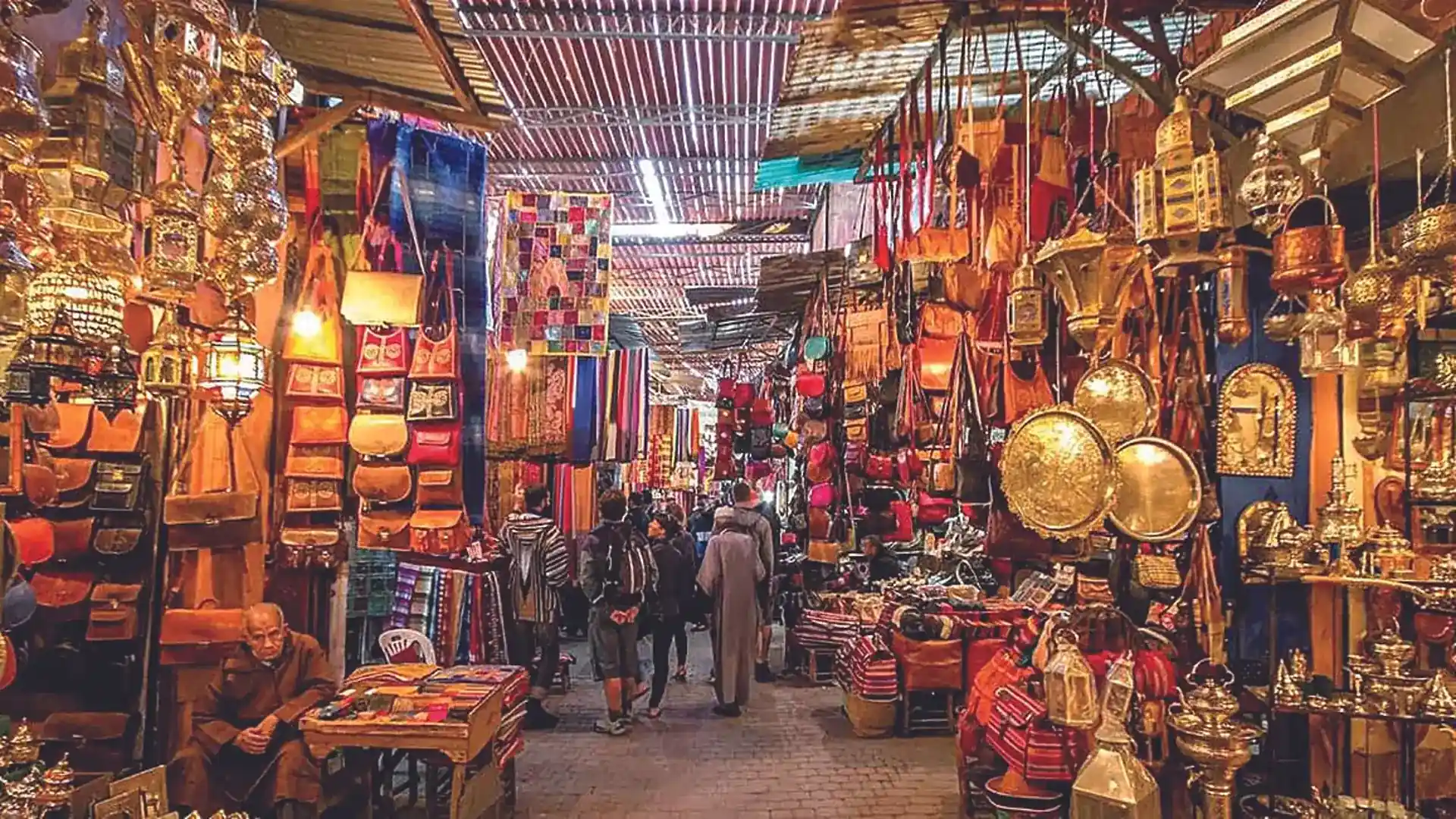
Fixed prices exist in some shops (they will be marked). In the majority of the medina souks, prices are negotiable. This is not a scam — it is how the market works and has worked for centuries. The initial price quoted to a tourist is almost always two to four times the final selling price.
A simple approach: show genuine interest, ask the price, counter at 40–50% of what was asked, and meet somewhere in the middle. The process is supposed to be friendly — a negotiation, not a confrontation. Smiling throughout makes it more enjoyable for everyone.
The most effective move: walking away. If the seller lets you go, the price was probably real. If they call you back with a better offer, you have room to keep negotiating. This works almost every time.
What not to do: do not start negotiating on something you have no intention of buying. It wastes everyone's time and is considered rude. If you name a price, you are committed to buying at that price if it is accepted.
SIM Cards & Connectivity
Morocco has three mobile operators: Maroc Telecom, Orange and Inwi. All three sell prepaid SIM cards at the airport and in shops throughout Marrakech. A SIM with 20GB of data costs around 50–70 MAD (€5–7). Coverage is excellent in cities and along main roads. It drops off significantly in the mountains and is minimal to non-existent in remote desert areas like Erg Chegaga.
Most riads and hotels have wi-fi. Quality varies widely — if reliable internet is important to you, check before booking. Cafes in Gueliz generally have better wi-fi than medina establishments.
For the desert: download offline maps before leaving Marrakech (Google Maps and Maps.me both work offline). Download anything else you might want — books, podcasts, downloaded Netflix — before the last stop with reliable signal, which is usually Ouarzazate or Tinghir.
Language — What Actually Helps
Morocco has four languages in daily use: Darija (Moroccan Arabic), Tamazight (Berber), French and Modern Standard Arabic. In Marrakech, French is the most useful second language after Darija. English is widely spoken in tourist areas. Spanish is useful in the north.
A few words of Darija go a long way. Not because you need them for communication — your guide or hotel will handle everything in English — but because the effort is noticed and genuinely appreciated.
Useful phrases: Shukran (thank you), La shukran (no thank you — very useful), Bslama (goodbye), Bzaf (too much — useful when bargaining), Wakha (okay). Pronounce them badly and people will still appreciate it.
Getting Around Marrakech
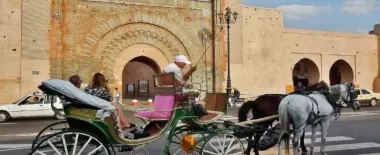
Petit taxis are the standard way to get around. Small, orange (in Marrakech), metered. Always insist the meter is on. If the driver refuses, get out and find another. The meter rate is very cheap by European standards — a trip across the city rarely exceeds 30 MAD.
Careem (ride-hailing, similar to Uber) works in Marrakech and is useful for fixing the price in advance. Worth having on your phone.
Walking in the medina is the only real option for the souks and narrow streets. The medina is not large — about 1.5 km across — but the layout is genuinely confusing. Embrace getting lost. You will find something interesting.
Food & Drink
Moroccan food is excellent and one of the best reasons to visit. Tagine (slow- cooked stew with meat or vegetables) and couscous (served on Fridays in most homes and restaurants) are the foundations. Harira (tomato and lentil soup) is served everywhere and is one of the best things you will eat. Pastilla — a sweet and savoury pastry with pigeon or chicken — is the dish that surprises people most.
Mint tea is served at every opportunity. It is very sweet by default. If you want less sugar, say shwiya sukkar (a little sugar). Refusing tea entirely is fine but slightly awkward in a commercial context where it is part of the sales ritual.
Alcohol is available in Marrakech — in licensed restaurants, hotel bars and some supermarkets (Carrefour in Gueliz). It is not available outside cities or in traditional medina restaurants. During Ramadan, availability decreases further. This is worth knowing before you plan a holiday around evening drinks.