Djemaa el-Fna — When to Go and When to Avoid
The square is the reason most people come to Marrakech and the reason many of them leave earlier than planned. It is genuinely extraordinary — a medieval carnival that runs from morning to midnight, with snake charmers, acrobats, storytellers, musicians and food vendors operating simultaneously across a space the size of two football pitches. It is also relentlessly chaotic and aggressively commercial.
The best time to experience Djemaa el-Fna is early morning — before 9am, when the orange juice vendors are setting up their carts and the square belongs mostly to pigeons and local workers. The light is good for photography and the atmosphere is completely different from the evening version. Sit at one of the café terraces on the southern edge with a coffee and watch the city wake up.
The evening version — after 7pm when the food stalls fire up — is worth doing once. The smoke, the noise, the 12,000 meals being cooked simultaneously. Just agree on the price before sitting down anywhere, and decline the menu that gets thrust in your face before you have looked around.
The Medina and Souks
The medina of Marrakech has been a UNESCO World Heritage Site since 1985. It is also genuinely confusing — a dense grid of covered alleyways, dead ends, and unmarked passages that has defeated GPS and navigation apps for years. Getting lost is not a problem. It is how the medina works.
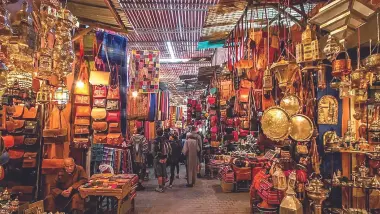
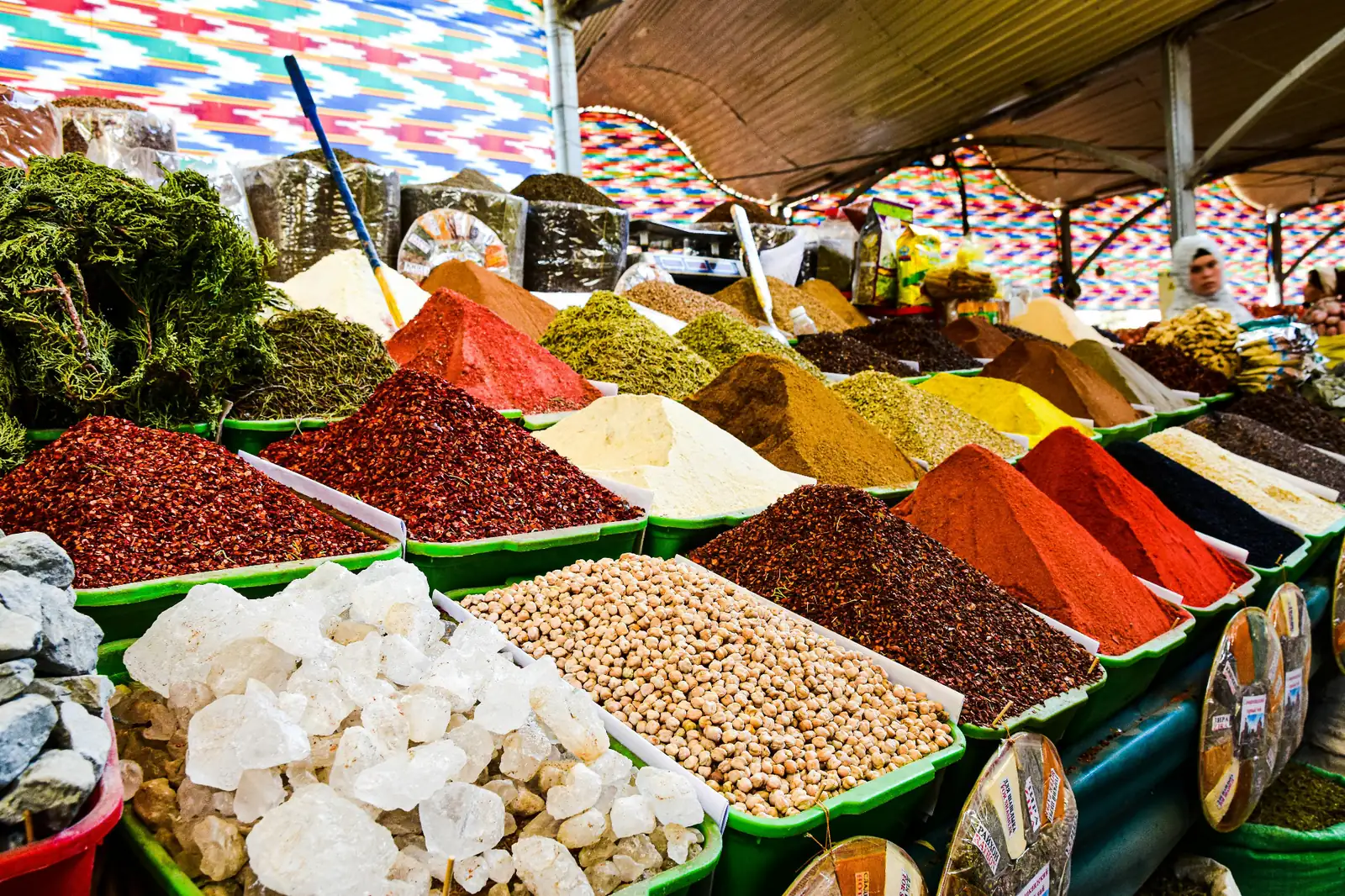
The souks north of Djemaa el-Fna are divided roughly by trade — spice sellers, leather workers, textile merchants, metal craftsmen. The leather tanneries (best viewed from the terrace of one of the surrounding shops) are one of the more memorable sensory experiences in Morocco — and one of the few places where the smell genuinely prepares you for what you are about to see.
A practical note on bargaining: prices in the medina are negotiable almost everywhere except labelled shops. The initial price quoted to a tourist is typically two to three times the final price. Starting at 40 to 50% of the ask and meeting somewhere in the middle is standard. Walking away is the most effective negotiating tool — if the seller lets you go, the price was probably real.
Monuments Worth Your Time
Bahia Palace
Built in the late 19th century as the residence of a powerful vizier, the Bahia Palace covers 8 hectares of gardens, courtyards and reception rooms decorated with intricate plasterwork and painted cedar ceilings. Entrance is 70 MAD. Go early — it gets crowded by late morning. The name means "brilliance" in Arabic and the main reception hall earns it.
Saadian Tombs
Sealed for centuries and only rediscovered in 1917 via aerial photography, the Saadian Tombs are the mausoleum of the Saadian dynasty — the rulers who made Marrakech their capital in the 16th century. 66 members of the dynasty are buried here in chambers decorated with some of the finest zellige tilework in Morocco. Small, quiet, and genuinely moving. Entrance 70 MAD.
Koutoubia Mosque
The 70-metre minaret is the architectural landmark of Marrakech — visible from most of the city and the model for the Giralda in Seville and the Hassan Tower in Rabat. Non-Muslims cannot enter the mosque but the gardens surrounding it are free, pleasant and one of the few quiet spaces in the city center.
Majorelle Garden
A botanical garden created by French painter Jacques Majorelle in the 1920s, later bought and restored by Yves Saint Laurent. The cobalt blue buildings against the green of the bamboo and cacti are immediately recognizable. Worth visiting but genuinely crowded — go at opening time (8am) or late afternoon. Entrance 150 MAD. The adjacent Berber Museum is included in the ticket.
Done with the medina? The Ourika Valley and Ouzoud Waterfalls are both under 3 hours from Marrakech.
See the Ouzoud Waterfalls day trip →The Quarters of Marrakech
The Medina
The old city inside the ramparts. Riads, souks, mosques, the Djemaa el-Fna. Where most tourists stay and where most of the historical interest is concentrated. Noisy, chaotic, and unlike anywhere else. The ramparts themselves — 19 kilometres of ochre-pink pisé wall — are best seen at sunset from the Bab Agnaou gate area.
Guéliz
The new city, built under the French protectorate west of the medina. Wide avenues, cafés, restaurants, galleries and the best supermarkets in Marrakech (Carrefour on Mohammed V). The atmosphere is completely different from the medina — more Mediterranean than North African. Most of the better mid-range restaurants are here.
Hivernage
The quiet residential district between the medina and Mohammed VI boulevard. Chic hotels, good restaurants. Less interesting to walk through but useful to know if your hotel is here.
La Palmeraie
The palm grove northeast of the city — 13,000 palm trees (fewer than there used to be, but still remarkable) surrounding luxury villas and resort hotels. Worth a bicycle or calèche ride if you have a quiet afternoon. The date palms here are part of why Moroccan cities call Marrakech "the city of palms."
Where to Eat — Honestly
The food stalls on Djemaa el-Fna are fine — safer than they used to be, with running water now installed at each stand. The atmosphere is worth the experience once. For actual good food, walk two streets into the medina where restaurants serve the same dishes for half the price to a local clientele.
For breakfast: any café near the Djemaa el-Fna with a terrace. Coffee, orange juice, msemen (Moroccan flatbread) with honey and argan oil. 20 to 30 MAD.
For lunch: the small restaurants around Bab Doukkala and in the Mouassine quarter serve set menus — soup, salad, tagine, tea — for 50 to 80 MAD. Harira (tomato and lentil soup) is available everywhere and is one of the best things you will eat.
For dinner in Guéliz: the restaurant scene is genuinely good, with places serving modern Moroccan cuisine and international food at prices that feel reasonable by European standards. The terrace restaurants on Mohammed V avenue fill up after 8pm.
Getting Around Marrakech
On foot
Inside the medina, walking is the only realistic option. The streets are too narrow for vehicles in most areas and the distances are short — the medina is about 1.5 km across. Wear comfortable shoes. The surface is uneven and the alleyways can be slippery after rain.
Petit taxis
Small orange taxis, metered, limited to Marrakech city. Always insist the meter is on. If the driver refuses, get out and find another. A cross-city trip should cost 15 to 25 MAD by day. The Careem app (similar to Uber) works in Marrakech and fixes the price in advance — useful if you want to avoid meter arguments.
Calèches
Horse-drawn carriages available around the Djemaa el-Fna and Koutoubia area. Negotiate the price before getting in — a circuit of the ramparts takes about an hour and costs around 150 to 200 MAD for the carriage. Good for the palmeraie.
Day Trips and Desert Tours from Marrakech
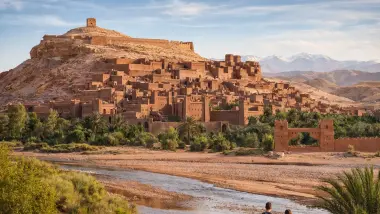
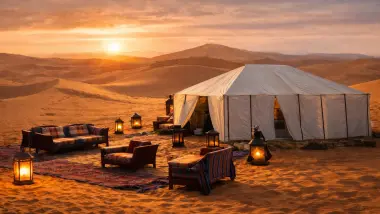
Marrakech is the best base in Morocco for day trips and multi-day tours. Within a day's drive: the Agafay desert (40 min), the Sahara via our 3-day Merzouga tour (9 hours), the Atlantic coast at Essaouira (2.5 hours), the highest waterfall in North Africa at Ouzoud (2.5 hours), the UNESCO kasbah of Ait Benhaddou (3 hours) and the High Atlas Mountains at Imlil (1.5 hours).
Most visitors to Marrakech spend one to two days in the city and then do at least one day trip or desert tour before moving on. The standard sequence — medina day, day trip, desert tour — covers a lot of Morocco without feeling rushed.