Quick Answer
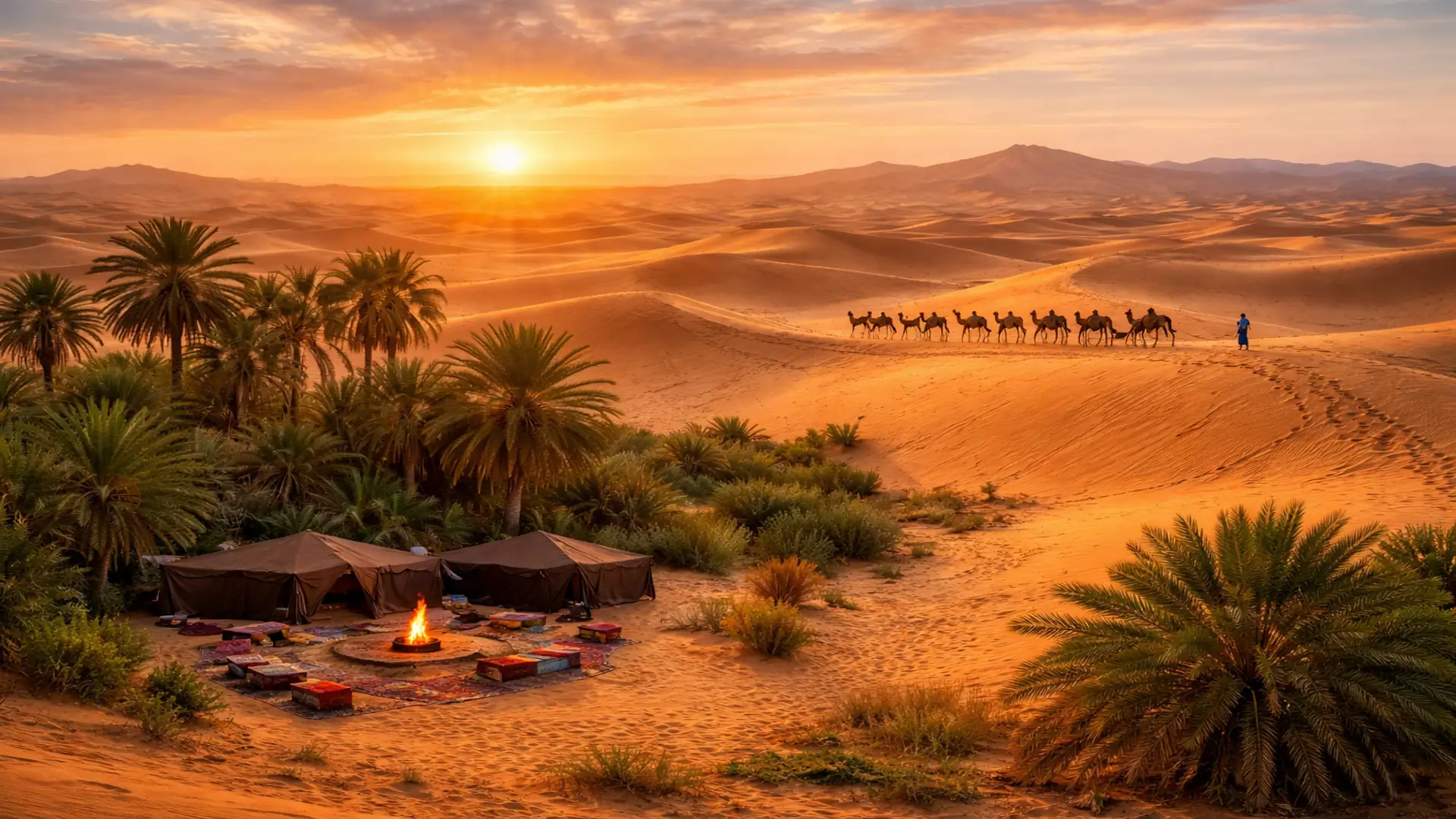
Best months for our 3-day Merzouga desert tour: March, April, October, November. Temperatures are comfortable, the light is extraordinary and the tourist crowds are manageable. If you can only remember one thing from this guide, remember those four months.
Avoid: July and August unless you specifically want to experience extreme heat. Daytime temperatures in Erg Chebbi regularly hit 48°C in July — that is not a typo. The camp experience at night is still pleasant, but the day is genuinely dangerous if you are not careful.
Month-by-Month Breakdown
January & February
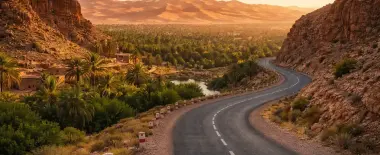
Daytime temperatures: 15 to 22°C. Nights: 2 to 8°C — cold enough to frost. The Atlas Mountains are covered in snow, which makes the drive from Marrakech genuinely spectacular. Very few tourists. Camps are quiet. The desert light in winter is hard and clear — photographers love it. The main downside is the cold camping experience. A sleeping bag rated to -5°C is not excessive.
March & April
Daytime temperatures: 22 to 32°C. Nights: 10 to 16°C — comfortable with a layer. This is peak season for good reason. The Atlas wildflowers are in bloom, the light is warm, and the desert is at its most photogenic. Book in advance — camps and shared group tours fill up quickly, especially around Easter.
May
Daytime temperatures: 30 to 38°C. Nights: 16 to 20°C. Still excellent for desert tours but starting to feel warm. May is often underrated — slightly fewer tourists than April, prices are better, and the evenings at the camp are perfect.
June
Daytime temperatures: 38 to 44°C. Nights: 22 to 25°C. The desert is getting hot. Manageable for most travelers if you stay in the shade between noon and 4pm, but it takes discipline. Not recommended for families with young children or older travelers who are sensitive to heat.
July & August
Daytime temperatures: 44 to 50°C. Nights: 25 to 28°C. This is the season we discourage for most travelers. The heat is not just uncomfortable — it is a health risk if you are not acclimatised. Sandstorms (called chergui) are more common in July. That said, some travelers genuinely want the extreme experience. If you are one of them, travel with plenty of water, do not walk on the dunes during the day, and know your limits.
September
Daytime temperatures: 38 to 44°C early in the month, dropping to 30 to 35°C by late September. The shoulder season begins. September can still be very hot in the first two weeks but the evenings start to cool. Late September is genuinely pleasant. One of the best-value months — fewer tourists, reasonable prices.
October & November
Daytime temperatures: 25 to 32°C in October, 18 to 26°C in November. Nights: 12 to 18°C. The second best season after spring. The summer heat is gone, the light turns golden, and the camps are quieter than in April. November nights start getting cold — bring a proper layer. This is our personal favourite month for desert tours.
December
Daytime temperatures: 15 to 22°C. Nights: 4 to 10°C. Similar to February. Beautiful light, empty dunes, cold nights. A surprisingly good time to go if you do not mind the cold camping experience.
The Truth About Summer
Every year we get bookings from travelers who have read that "Morocco is great year-round" and assumed that includes the Sahara desert in August. It does not. The Moroccan coast in August is excellent. The imperial cities are manageable with air conditioning. But Erg Chebbi at noon in July is a different planet.
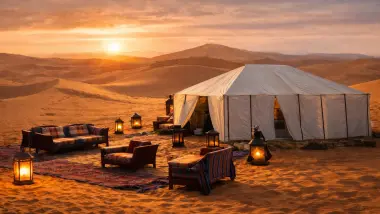
The camps do not have air conditioning. The tents retain heat. The camel ride at sunset, which is the centrepiece of the experience, happens when it is still 35°C. If you must travel in summer — because school holidays leave you no choice — opt for the 4-day tour rather than the 3-day, which gives you more recovery time between the long driving days.
The Underrated Winter Season
December, January and February are the Sahara's best-kept secret. The dunes are empty. The camps charge lower prices. The light at sunrise on Erg Chebbi in January is the most dramatic we have seen in any season — low angle, hard shadows, the orange of the dunes against a deep blue sky.
The trade-off is the cold. Desert nights in January can drop below freezing — worth noting for the 2-day Zagora tour in winter. The camp provides blankets but a sleeping bag liner is worth bringing. The drive over the Atlas in winter is also more variable — snow on the Tizi n'Tichka pass occasionally closes the road for a few hours. We always have an alternative route ready but it adds time.
Decided on your dates? The 3-day Merzouga tour runs year-round — check the itinerary and availability.
See the 3-day Merzouga tour →What to Pack by Season
Spring & Autumn (March–May, Sept–Nov)
Light clothes for the day, a fleece or light jacket for evenings at the camp. Sunscreen is essential year-round — the desert sun at altitude is intense even when temperatures are mild. A headscarf or buff for the camel ride (sand in the face is unpleasant). Comfortable walking shoes for the dune climb.
Summer (June–August)
Light, loose, long-sleeved clothing for sun protection. A large hat. At least 3 litres of water per person per day in the desert. Sunscreen SPF 50+. Despite the heat, a light layer for the camp at night — the temperature drop after sunset is faster than most people expect.
Winter (Dec–Feb)
Warm mid-layer (fleece or down). A windproof outer layer for the camp. Warm socks. A sleeping bag liner if you run cold. The days are often surprisingly warm so layer up — you will be adding and removing clothes throughout the day.
Our Verdict
If you have flexibility on dates, choose October or April. Both months offer near-perfect desert conditions, reasonable tourist numbers, and the best value on tours and camps.
If you are travelling with children, avoid June through September entirely. The spring and autumn windows are long enough that most family trips can be planned around them.
If budget is the priority, January or February offer the best prices and the fewest crowds, with the trade-off of cold nights. It is worth it if you pack appropriately.