Overall Safety — The Honest Picture
Morocco is a safe country for tourists. That is not marketing — it is the experience of the millions of visitors who come every year and the consensus of people who live and work here. Violent crime against tourists is rare. Political instability is not a factor in daily life. The infrastructure for tourism is well-developed and the country has a strong economic interest in keeping visitors safe.
That said, "safe" does not mean "nothing to be aware of." The medina in Marrakech can be disorienting and persistent. Petty scams exist and they target tourists specifically. Solo female travelers face a level of street attention that ranges from annoying to genuinely uncomfortable. None of this is unique to Morocco — it exists in varying degrees in most popular tourist destinations — but it is worth knowing about before you arrive.
Marrakech Specifically
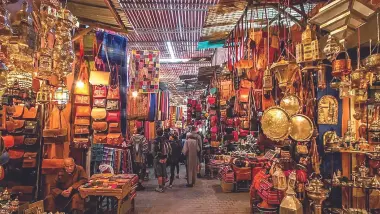
Marrakech is the city that generates the most questions about safety, usually because of the medina. The old city is a genuine labyrinth — thousands of unmarked alleyways, no grid pattern, GPS that loses its mind the moment you turn off the main streets. Getting lost is not a safety issue, it is just what happens. The medina is safe to walk at all hours, including at night.
The Djemaa el-Fna square at night is perfectly safe and one of the great spectacles of the world. The restaurants on the square are aimed squarely at tourists and priced accordingly — if you want to eat well and cheaply, walk two streets into the medina. The food stalls on the square are fine; just agree on the price before you sit down.
The new city (Gueliz) feels like any mid-sized Mediterranean city. Cafes, restaurants, shopping centres, very little hassle. Most of the better restaurants are in Gueliz and the walking is much less stressful than the medina.
Common Scams and How to Avoid Them
The "free" henna: A woman approaches and starts applying henna to your hand before you have agreed to anything. The price demanded at the end is always high. Solution: do not let anyone touch your hand without first agreeing a price. Walk away if pressured.
The "closed today" guide: A friendly stranger tells you that the place you are looking for is closed, or that there is a better one nearby. It is never closed. The "better one nearby" is a shop where he earns commission. This happens dozens of times a day in the medina. A polite "no thank you" and continuing to walk is all that is needed.
Unofficial taxis: Unmarked cars offering lifts, especially near the airport and train station. Use only the official beige petit taxis or ride-hailing apps (Careem works in Marrakech). Always insist the meter is on.
Restaurant menus without prices: Rare but it happens. If there are no prices on the menu, ask before ordering. Any legitimate restaurant will show you prices without hesitation.
None of these are violent. They are low-level nuisances that every visitor to Marrakech encounters to some degree. The best protection is simply knowing they exist — once you recognise the pattern, the approach loses all its power.
Solo Female Travel
This section deserves honesty rather than reassurance. Morocco is safe for solo female travelers in the sense that violent crime is rare. It is not always comfortable in the sense that street harassment — unwanted comments, persistent attention, following — is common in some areas, particularly in the medina and around the Djemaa el-Fna at night.
What actually helps: dressing modestly (shoulders and knees covered) reduces attention significantly. Walking with purpose and avoiding eye contact with people who are trying to engage you works better than any other strategy. Staying in areas with other tourists provides natural social cover. Having a local contact or guide, even for half a day, transforms the experience.
Thousands of solo female travelers visit Morocco every year and have extraordinary trips. It requires more preparation and more awareness than some other destinations. It is worth it.
Safety on Desert Tours
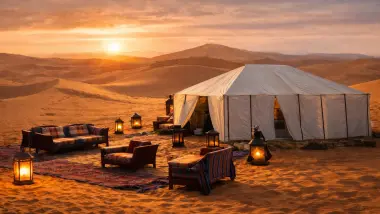
Guided desert tours from Marrakech are safe. The routes are well-established, the drivers know the roads, and the camps are run by local Berber families who have been hosting tourists for decades. This is their livelihood and their reputation. We have been running desert tours since 2019 and have not had a serious safety incident.
Things worth knowing: the Tizi n'Tichka mountain pass can be icy in winter — your driver will know when to wait and when to proceed. The desert at night is cold year-round — hypothermia from inadequate clothing is a genuine risk that tourists underestimate, especially in spring when daytime temperatures are warm. The sun in the Sahara is aggressive — sunstroke is possible in summer if you are not careful about hydration.
For Erg Chegaga specifically — the remote desert near M'Hamid — always go with an experienced guide. This is not an area to explore independently.
Practical Safety Tips
Travel insurance: Get it. Medical care in Morocco is adequate in Marrakech and other cities but evacuation costs are significant if something serious happens in a remote area.
Health: Tap water in Morocco is technically treated but most locals drink bottled water. Stick to bottled water, particularly in the south. Food from reputable restaurants is safe. Street food is generally fine — the high turnover means fresh ingredients. Use your judgment.
Emergency numbers: Police 19, Ambulance 15, Fire 15. Tourist police in Marrakech are based near the Djemaa el-Fna and are specifically trained to deal with tourist issues.
Cash: Keep most of your cash in your hotel safe and carry only what you need for the day. Pickpocketing in crowded areas like the souks exists, though it is less common than in many European cities.