Three Budget Levels — What Each Gets You
Backpacker — €30 to €50 per day
Achievable in low season (July to August and November to February outside Christmas). In high season (March to May, September to October) this budget gets tighter but is still possible with the right choices. At this level: a dorm bed or the cheapest private room in a medina guesthouse, street food and local restaurants, shared group transport and buses between cities.
The honest note: rooms at 100 MAD (€10) per night exist but the quality at that price is inconsistent — damp walls, no hot water, noise from the street. A private room at around €20 to €25 per night in a small medina guesthouse gives you the riad experience without the dorm compromise and is the sweet spot at this budget level.
Budget Comfortable — €70 to €100 per day
This is the strongest value category in Morocco. At €80 per day you can stay in a well-restored medina riad with breakfast included, eat well at quality local restaurants, take day trips, and do one multi-day tour — our shared 3-day Merzouga tour from €89 — without stretching. Most European and American travelers who plan carefully end up in this range.
Mid-Range — €150 per day and above — private desert tours and upgraded camps
Above €150 per day, Morocco becomes genuinely luxurious. Private tours, upgraded desert camps, the better riads with private pools, palace-standard restaurants. The ceiling is high — the Royal Mansour starts at €800 per night — but even at €150 to €200 per day the quality of experience in Morocco is exceptional compared to what the same budget buys in Europe.
Accommodation Costs
Dorm bed in a medina hostel: €8 to €15 per night. Available in low season. In high season, genuine budget beds disappear quickly.
Budget private room in a small guesthouse: €20 to €35 per night. The practical minimum for a decent private room with a bathroom. In this range you can find genuinely charming small riads with a courtyard and breakfast included — particularly in the Bab Doukkala and Mouassine quarters of the medina.
Mid-range riad with pool and breakfast: €60 to €120 per night. The best value category. A restored historic property, attentive service, good breakfast. Compare to what the same budget buys in Paris or London.
Desert camp — standard Berber tent with dinner: typically included in tour prices. If booked separately, €25 to €50 per person per night. Luxury camps: €150 to €300 per tent.
Seasonal variation: High season (March to May, September to October) sees prices rise 30 to 50% across all categories. Book ahead. July and August are paradoxically cheaper for accommodation — domestic tourism focuses on the coast, leaving Marrakech riads with availability.
Food Costs — From Bissara to Bastilla
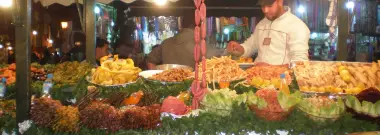
Food in Morocco can be extraordinarily cheap or surprisingly expensive depending entirely on where you choose to eat. The same tagine costs 40 MAD at a local neighbourhood restaurant and 150 MAD at a tourist restaurant on Djemaa el-Fna.
Street level / ftour breakfast: 15 to 20 MAD. Bissara, bread, egg, tea. The best value meal in Morocco.
Local neighbourhood restaurants (Chez Bejgueni, Chez Lamine, Snack Al Bahri): 60 to 120 MAD for a full meal with drink. These are the addresses Moroccans eat at. Same quality or better than tourist restaurants at a fraction of the price.
Mid-range medina restaurants (Fusion Beldi): 150 to 250 MAD per person. Worth it for a special meal — quality justifies the price.
Tourist restaurants on Djemaa el-Fna (L'Adresse, Argana, Zeitoun): 150 to 300 MAD per person. You pay for the view as much as the food.
Drinks: Mint tea 15 to 20 MAD. Fresh juice 12 to 15 MAD. Coffee 20 to 25 MAD in a café. 15 MAD on a Djemaa el-Fna terrace. Alcohol: Morocco is a Muslim country and alcohol is limited to licensed restaurants, some riads and hotel bars. Expect European prices where available.
Daily food budget: €8 to €12 eating local. €20 to €35 mixing local and mid-range. €50+ eating at tourist restaurants for every meal.
Getting Around — What Costs What
In Marrakech
Petit taxi — the orange city taxis. Metered, affordable (15 to 25 MAD cross-city), plentiful. The meter is required by law. If a driver refuses to use it, get out. If he continues to refuse after you insist, note the taxi number — a single call to the transport authority costs an uncooperative driver significantly more than the fare difference.
Calèche — horse-drawn carriage. Good for the palmeraie circuit. Negotiate the price before you get in — typically 150 to 200 MAD for a one-hour circuit. Not metered.
Between Cities
CTM and Supratours are the two main long-distance bus companies. Both are reliable, comfortable — air-conditioned with assigned seats — and significantly cheaper than private transfers. Marrakech to Agadir: around 90 MAD. Marrakech to Fes: around 150 MAD. Book online at ctm.ma or through the station.
Grand taxis — shared long-distance taxis that depart when full (6 passengers). Faster than buses for shorter intercity routes. The price is per seat, negotiated before departure. Reliable for routes like Marrakech to Ouarzazate but requires knowing the correct going rate to avoid overpaying.
Train — ONCF covers Casablanca, Rabat, Fes and the north. Does not serve Marrakech directly for most destinations — requires a connection. Comfortable and punctual. Book at oncf.ma.
For Day Trips and Desert Tours
Public transport does not cover most day trip destinations efficiently — there is no bus to Ouzoud that gets you there and back in a day. Shared group tours are the budget solution: a shared desert tour from Marrakech to Merzouga starts from €89 per person for 3 days, which covers transport, accommodation and a camel ride. Considerably cheaper than a private tour and the most practical option for solo travelers and small groups on a budget.
Tours and Activities
Day trips (shared group): from €15 per person for the Ourika Valley, €20 for Essaouira, €25 for Ouzoud Waterfalls. These are the most budget-friendly ways to get out of Marrakech.
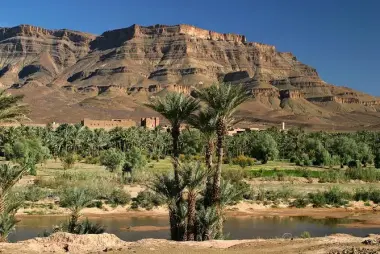
Desert tours (shared group): from €89 for 3 days to Merzouga, from €65 for 2 days to Zagora. Includes transport, accommodation and camel trek. Per day cost is very reasonable for what is included.
Museum entrance fees: Most Marrakech monuments cost 70 MAD (Bahia Palace, Saadian Tombs, Le Jardin Secret). Majorelle Garden is 150 MAD. Allow 300 to 400 MAD for a full day of Marrakech monuments.
Budget Traps — What to Watch For
The Unofficial Guide
In the medina, men will offer to show you to your destination, a specific shop, or a "hidden" riad — for free. The free part rarely stays free. At the end of the visit, a payment is expected — sometimes aggressively. The technique: walk with purpose, wear headphones (even if not playing anything), and say no clearly and calmly without engaging further.
A nuance worth knowing: sometimes these guides are actually useful — for 20 MAD they can direct you to a genuinely good and affordable address you would not have found alone. The problem is not the service, it is the ambiguity about payment at the start. If you want a guide, agree on a price before you start walking.
The Taxi Without a Meter
Covered above — but worth repeating. The meter is mandatory. Any driver who refuses it is counting on you not knowing this. Note the taxi registration number if there is a dispute. The transport authority takes complaints seriously and the consequences for the driver are significant.
The Tourist Restaurant on the Square
A menu displayed in six languages with a man outside trying to pull you in is not a budget option despite appearing accessible. The food is mediocre and the prices are high. Two streets into the medina, the same meal costs half as much and tastes better.
The Souvenir Negotiation
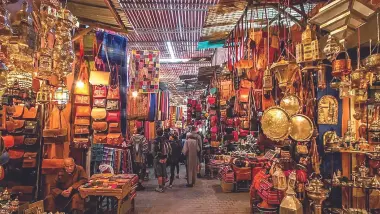
Bargaining is normal and expected in the souks. The opening price is typically two to three times the realistic final price. Start at 40 to 50% of the ask and meet in the middle. Do not bargain for things with fixed prices — a mint tea at 15 MAD is a fair price, not an opening offer. Knowing which category you are in saves awkwardness.
How to Make Your Budget Go Further
Plan from a café. Before committing to any restaurant or activity in the medina, sit down with a coffee (15 MAD on Djemaa el-Fna, with a view), open your maps app, and look at what is nearby. Reading menus and reviews before you walk in gives you the information to make good choices rather than defaulting to whatever is nearest.
We are working on a complete Marrakech guide — real hotel and riad recommendations by price, the best eating spots by neighbourhood and budget, transport tips and the addresses that actually deliver what they promise.
Eat where Moroccans eat. The simplest rule: if the clientele is entirely tourists, the price is for tourists. Walk one or two streets away from the main tourist circuit and the same meal costs significantly less.
Use shared group tours. For day trips and desert tours, shared group departures are the budget solution. The experience is essentially the same as a private tour — same vehicle, same destinations, same camel ride — at a fraction of the cost. The trade-off is flexibility on timing, which matters less than people expect.
Book accommodation in advance for high season. The best-value riads (quality-to-price ratio) sell out first. If you are visiting in March to May or September to October, book at least 4 to 6 weeks ahead. Last-minute availability in high season tends to be either very expensive or very basic.
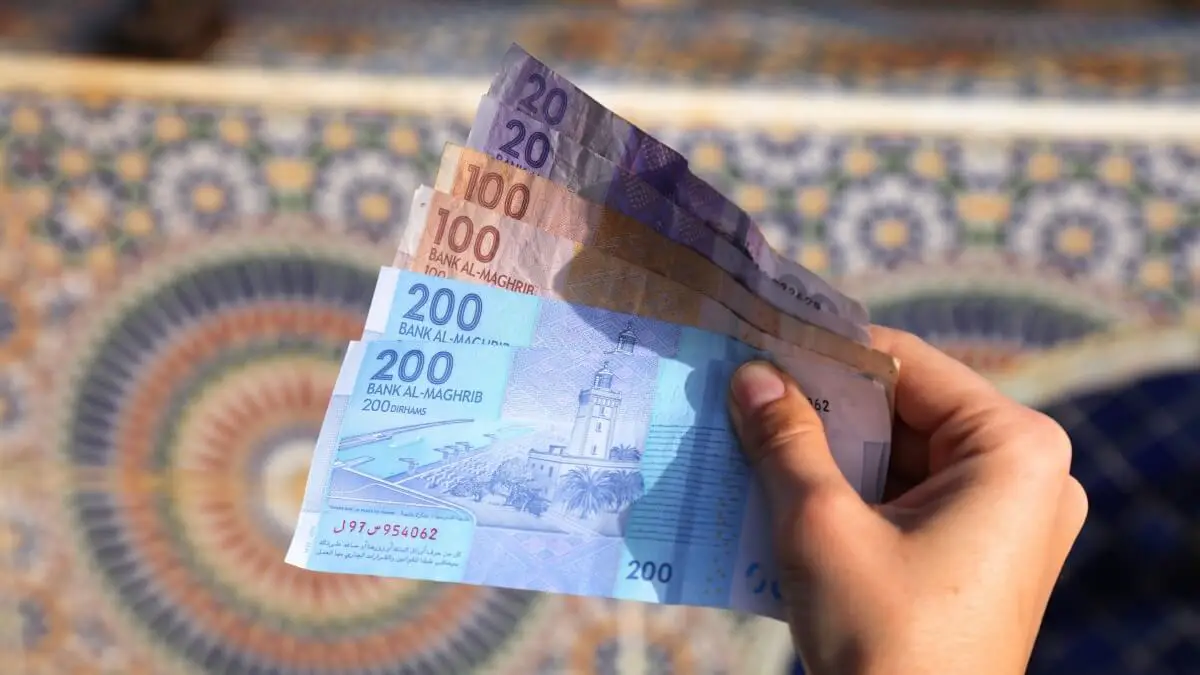
Exchange at ATMs, not airport counters. Airport exchange desks offer poor rates. An ATM with your home bank card gives the interbank rate minus a small fee — significantly better. Check whether your card charges foreign transaction fees and use one that does not.