Summer Packing List — April to October
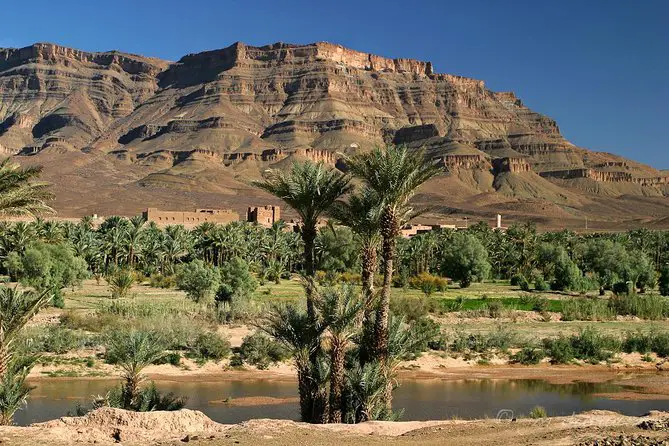
Summer in Morocco means heat. Marrakech in July reaches 38 to 42°C in the medina. The desert can hit 45 to 50°C at midday. The Atlas Mountains are cooler — 20 to 25°C at 2,000 metres — but the sun at altitude is intense. Pack light, pack breathable, and pack more sun protection than you think you need.
- Lightweight linen or cotton shirts (2 to 3) — dark colours show sweat less
- Light trousers or long skirts — for medina comfort and sun protection on legs
- Shorts for Guéliz, riads and the coast — fine in the new city, less appropriate in the medina
- A light long-sleeved layer for evenings and air-conditioned interiors
- Swimwear — for the riad pool, Essaouira beach, Ouzoud pool
- A wide-brim hat — essential, not optional
- Sunglasses with UV protection — the light in the desert is brutal
- A desert robe or light djellaba — buy one in the Marrakech souks for 100 to 150 MAD. Covers arms and legs, breathes well, keeps sand off skin. Also a beautiful souvenir.
- A desert turban (naama) — your guide will wrap one for you at the camp. Keeps sand out of your face, eyes and ears on the camel ride. Accept it — it works.
- Warm layer for desert nights — temperatures drop 20°C between day and night year-round in the Sahara
- Closed shoes for dune walking — see the shoes section
- Sunscreen SPF 50+ — in large quantity. The Moroccan sun is strong year-round and brutal in summer. Do not underestimate it. Buy in Europe or online — it is cheaper and the quality is more reliable.
- Lip balm with SPF
- After-sun lotion
Winter Packing List — November to March
Winter Morocco is a tale of two climates. Marrakech city sits at 466 metres and stays mild — 18 to 20°C in January, rarely cold enough for a heavy coat. The desert nights drop to 0 to 5°C. The Atlas Mountains above 2,000 metres have snow from December to March. You need layers, not just one temperature solution.
- A proper warm jacket — for desert nights and Atlas mountain days. Not a light windbreaker.
- Mid-layer (fleece or light down) — for layering in the Atlas and desert evenings
- Long trousers — two pairs minimum
- Warm socks — for cold desert nights in the camp tent
- Gloves and a beanie — essential above 2,000m, useful in the desert at night
- Waterproof jacket — winter rain is possible in Marrakech and the Atlas
- 1 or 2 lighter layers for Marrakech city (still mild during the day)
- A sleeping bag liner — the standard camp blankets are basic. A liner adds significant warmth.
- The desert robe still applies in winter — worn over your layers it traps heat and blocks wind
- Hand warmers — optional but appreciated on a 5am dune climb in January
- SPF 50+ sunscreen still required — the sun is lower but UV at altitude is intense regardless of temperature
- Lip balm with SPF — cold and sun together is hard on lips
What to Wear — Medina, Desert and Beyond
In Marrakech City
Marrakech is a modern city and dress standards in most areas are relaxed. In Guéliz, the new city, European clothing is completely normal — you will see Moroccan women in everything from djellabas to jeans to summer dresses. In the riads and tourist areas, there are no restrictions.
In the medina, particularly in the more residential and religious quarters, covered shoulders and knees show basic respect and also tend to reduce unwanted attention. It is a recommendation rather than a rule — and one that applies mainly to remote villages and traditional areas rather than the main tourist circuit.
The practical reality: Moroccan women in Marrakech dress in every possible way. Adapting your clothing to the neighbourhood you are in is the sensible approach, not a strict rule that applies everywhere.
In the Desert
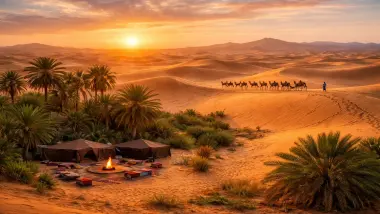
Cover up. The desert sun is extreme, the sand gets everywhere, and the temperature swing between day and night is significant. A loose desert robe (djellaba or similar) worn over shorts and a t-shirt is the most practical solution — it covers your skin from sun and sand while remaining cool. They are available throughout the Marrakech souks for 100 to 150 MAD and are considerably cheaper and better quality than anything you will find at the camp.
For your head: the turban your guide wraps is not a tourist gimmick. It keeps sand out of your face and hair during the camel ride and protects your neck from the sun. The technique takes practice — let the guide do it.
Shoes — The Most Underestimated Item
More Morocco trips are compromised by the wrong shoes than by any other packing decision. The medina cobblestones are uneven. The Ourika valley path is wet stone. The Toubkal trail is loose rock. The Erg Chebbi dunes are hot sand that gets inside everything.
What you need: One pair of comfortable walking shoes or light hiking shoes with decent grip and a closed toe. Not flip-flops, not smart shoes, not new shoes you have not broken in yet.
The Sahara in particular: before you leave home, you look at photos of the dunes and think sandals will be fine. You get there, the sand is 50°C at midday, the terrain is more varied than the photos suggest, and you understand why the advice said closed shoes. Pack them.
Flip-flops or sandals as a second pair — for the riad pool, the beach at Essaouira, the camp at night. Fine for relaxing, not for walking.
One positive note on Morocco and shoes: the leather babouche and sandals in the medina souks are genuinely beautiful and very affordable. If you arrive with the wrong footwear, the medina will sell you something better.
Medication and Health
Digestive: Bring Imodium or Smecta from home. A change of cuisine and water can affect digestion in the first few days — common, manageable, and much easier to deal with if you have something in your bag. Basic medications like paracetamol and ibuprofen are available in Moroccan pharmacies at very low prices — often cheaper than in Europe. Specialised medications and branded products are better bought at home or compared online before you leave.
Sunscreen: Buy it before you go, in quantity. Sunscreen in Morocco can be expensive and the selection is limited outside major cities. SPF 50+ minimum for the desert and mountains. SPF 30 is insufficient in the Sahara in any season.
Motion sickness: The road over the Tizi n'Tichka pass involves sustained switchbacks at altitude. If you are prone to car sickness, bring medication. If you sleep well in moving vehicles you will probably be fine — but having a pill available costs nothing.
Antihistamines: The desert produces dust and some people react to the fine sand particles. Worth having in your kit if you have any history of dust or pollen allergies.
Travel insurance: Not a medication but worth mentioning here. If you are doing the Toubkal trek or any serious Atlas hiking, make sure your insurance covers mountain rescue. Standard travel insurance often does not.
Cash and Cards
Morocco operates primarily on cash. Cards are accepted in hotels, larger restaurants and some shops in Guéliz and tourist areas — but the medina, the souks, the street food stalls, the local restaurants, the mountain villages and the desert camps are cash only.
ATMs are available in Marrakech, Ouarzazate and larger towns, but rare or absent in the desert and Atlas villages. The rule: withdraw enough cash in Marrakech before any multi-day tour to cover the full duration.
Currency: MAD (Moroccan dirham). Cannot be obtained outside Morocco — exchange at the airport on arrival or use an ATM. 1 euro ≈ 10-11 MAD. 1 USD ≈ 10 MAD. British travelers: check the current rate and bring a card that does not charge foreign transaction fees.
Power adapters: Moroccan plugs are the same as French/European (Type C and E — two round pins). European travelers need no adapter. British and American travelers need one — buy before you go, they are hard to find in the medina.
What People Always Forget
Sunscreen (again): The most common item our clients arrive without or in insufficient quantity. The Moroccan sun is not the same as the European sun. You will burn faster than you expect, at altitude faster still. SPF 50+, more than you think you need.
A daypack: A small backpack (15 to 20 litres) for day trips is essential — water bottle, sunscreen, camera, light layer, snacks. Buy it before you leave. Bags in Morocco are cheap but quality is inconsistent — the exception is leather goods, where Moroccan souks offer genuinely excellent quality at prices far below what you would pay in Europe or the US.
A reusable water bottle: You will drink more water in Morocco than at home, particularly in the desert and on hikes. Buying plastic bottles throughout is expensive and wasteful. A 1-litre bottle that you refill from large hotel water containers is the practical solution.
Cash in small denominations: A 200 MAD note is difficult to break at a street stall. Arrive with a supply of 20 and 50 MAD notes for tipping, street food and small purchases.
A photocopy of your passport: Leave the original in the riad safe, carry the copy. Required for some border areas and desert camp check-ins.
Comfortable shoes (not new ones): Already covered above — but it bears repeating because it is the most frequent regret. Break them in before you arrive, or buy locally when you realise the problem.