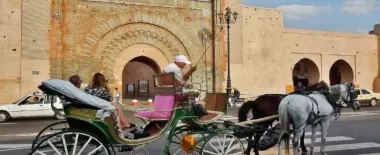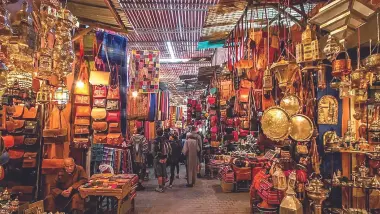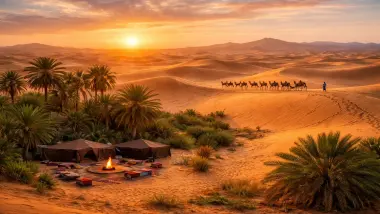
The Landscape Variety Is Unmatched
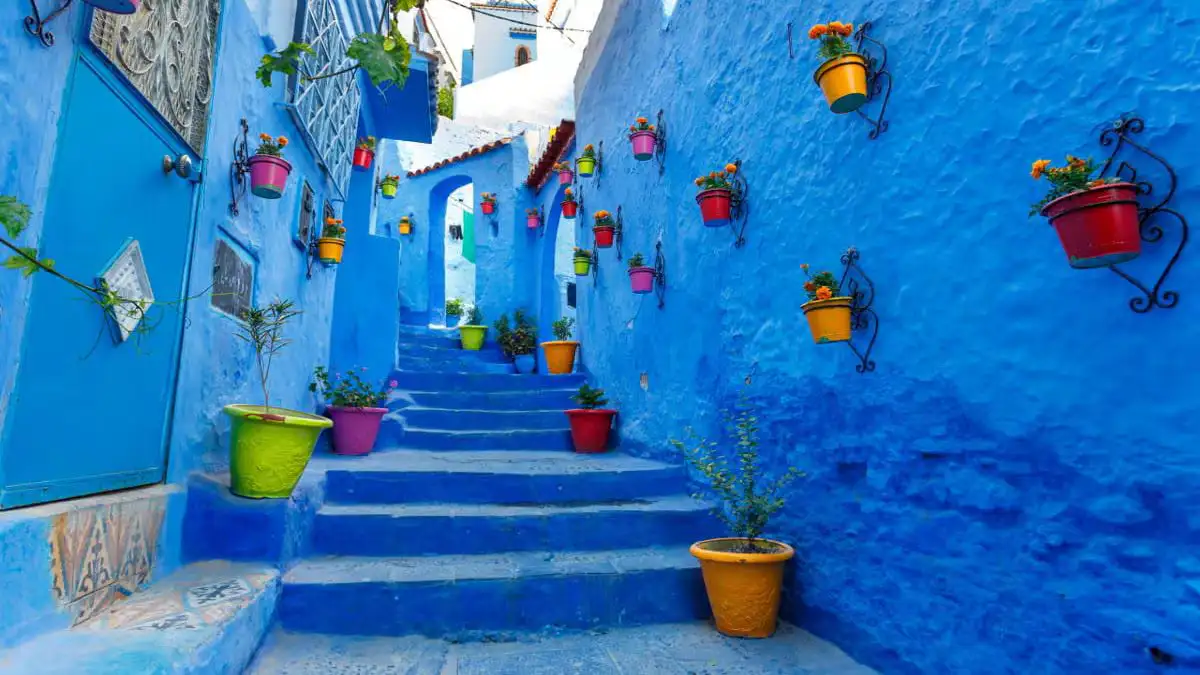
In most countries, a week of travel means one kind of landscape. Morocco gives you five. From a single base in Marrakech you can reach the Sahara desert (9 hours south), the Atlantic coast (2.5 hours west), the highest peak in North Africa (1.5 hours south), Roman ruins (5 hours north) and medieval imperial cities (3 hours north or east). No other country of comparable size offers this combination.
This is not a travel brochure claim — it is a logistics fact. A 7-day Morocco trip can realistically include: two days in Marrakech medina, one day trip to Essaouira or Ouzoud, a 3-day desert tour to Merzouga, and a day in Fes via our Marrakech to Fes route, and a full Atlantic city at Essaouira. Each of those feels like a completely different country.
It Is Closer Than You Think
From London, the flight to Marrakech is 3.5 hours — shorter than flying to many European destinations. From Paris it is 3 hours. From Madrid, 2.5 hours. Morocco sits at the western tip of North Africa, separated from Spain by 14 kilometres of water at the Strait of Gibraltar.
The time difference is minimal — Morocco is on GMT year-round, which means 1 hour behind most of Western Europe in summer and the same time in winter. No jet lag. No long-haul recovery day. You land in Marrakech and the medina is 15 minutes from the airport.
Budget airlines serve Marrakech from most major European cities. The cost of flights is often the smallest line item in a Morocco trip budget.
The Hospitality Is Real
Moroccan hospitality has a reputation that precedes it. The reputation is accurate. The culture of welcoming guests — offering tea, taking time, treating a visitor as someone worth attending to — is not a performance for tourists. It comes from a deep-rooted tradition in Berber and Arab culture that predates the tourist industry by centuries.
This does not mean every interaction in the medina is sincere — the souks have their own dynamics. But outside the tourist zones, in the Atlas villages, in family guesthouses, in desert camps — the warmth is genuine and consistent. It is one of the things travelers mention most often when they come back.
We have had clients bring us flowers and chocolates on our birthday because they wanted to say thank you. We do not know how they found out the date. That is Morocco.
The Food
Moroccan cuisine is one of the great underrated food cultures. Tagine and couscous are the known exports, but the actual range is much wider — harira soup, bastilla (pigeon or chicken pie with almonds and cinnamon), mechoui (slow-roasted lamb), fresh pastilla, the pastries and honey of a traditional Moroccan breakfast. The spice culture — ras el hanout, preserved lemon, argan oil, saffron from Taliouine — is specific and centuries old.
The food is cheap by European standards. A full tagine with bread and mint tea at a local restaurant costs 50 to 80 MAD (5 to 8 euros). Fresh orange juice on Djemaa el-Fna costs 4 MAD. The port stalls at Essaouira serve grilled sardines for 30 MAD. The gap between quality and price is one of the genuine pleasures of traveling in Morocco.
The Cost
Morocco is affordable for European and American travelers. The exchange rate is favourable — 1 euro buys approximately 10 to 11 MAD, 1 USD buys approximately 10 MAD. A comfortable mid-range riad in Marrakech medina costs 60 to 100 euros per night with breakfast. A 3-day desert tour including transport, accommodation and a camel ride costs from 89 euros per person in a shared group.
The main costs for a Morocco trip are flights (variable), accommodation (affordable), tours and transport (reasonable), and food (very cheap). A 7-day trip with a desert tour, comfortable accommodation and good meals can be done for 600 to 900 euros per person all-in — significantly less than comparable trips in Europe.
The Climate — Especially in Winter
Marrakech averages 300 days of sunshine per year. In January, when Paris is grey and cold, Marrakech has daytime temperatures of 18 to 20°C and a blue sky. The city is full of European visitors in winter specifically because of this.
The best seasons for a Morocco trip are March to May and September to November — moderate temperatures everywhere, the desert is not extreme, the Atlas is accessible. Summer (July to August) in Marrakech reaches 38 to 42°C in the medina, which is genuinely uncomfortable for walking. The coast stays cooler — Essaouira rarely exceeds 25°C even in August.
Winter has its own appeal — the Atlas Mountains are snow-covered, the desert nights are cold and clear, and the tourist sites are at their quietest. If you want Marrakech without the peak-season crowds, December to February is the window.
Safety — The Honest Answer
Morocco is a safe country for tourists. It has been a stable constitutional monarchy since 1956 and has maintained political continuity through a period when several neighbouring countries did not. The tourist infrastructure is well-developed and the country receives 13 to 14 million visitors per year.
The honest note on safety: petty hassle in tourist areas — persistent vendors, unsolicited guides, people trying to lead you to their cousin's shop — is a reality in Marrakech medina and other tourist zones. It can be tiring. It is not dangerous. A firm but polite "no thank you" and continuing to walk works in most situations.
The Atlas Mountains and the desert regions are genuinely safe. Outside the tourist medinas, the country is overwhelmingly hospitable and relaxed. Solo female travelers visit Morocco regularly and safely — with the usual urban precautions that apply anywhere.
Marrakech as a Base
Marrakech is the best entry point for most Morocco trips. It has an international airport with direct flights from most European cities, a well-developed tourist infrastructure, and more day trip and multi-day tour options than any other Moroccan city.
The medina of Marrakech is genuinely worth two days of your time — the souks, Djemaa el-Fna, the Bahia Palace, the Saadian Tombs, the gardens. But Marrakech works best as a hub rather than a destination. The city is the starting point for everything around it — and everything around it is extraordinary.
The Sahara is 9 hours south. The Atlantic is 2.5 hours west. The highest mountain in North Africa is 1.5 hours south. The blue city of Chefchaouen is 6 hours north. No other city in Morocco puts all of this within reach.